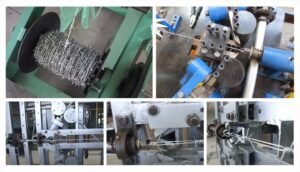
The Manufacturing Process Of Barbed Wire
A. Raw Material Selection
We use low-carbon steel wire (Q195, Q235) as the base material. The quality of the steel determines the tensile strength (breaking load) of the wire.
Wire Gauge: We typically use 12 gauge to 16 gauge, depending on the tensile strength required.
Core Wire: The two main strands (line wires) are twisted together with a barbed strand in between.
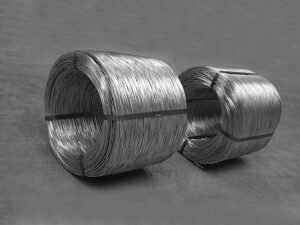
B. Galvanization: The Key to Anti-Rust
Since Southeast Asia has a tropical climate with high rainfall and humidity, rust resistance is critical. We offer two types of galvanization:
Electro Galvanized: A smooth, shiny coating. Suitable for dry areas or temporary fencing.
Hot-Dipped Galvanized (HDG): A thicker, rougher zinc coating. Recommended for long-term use in coastal areas (like Indonesia, Philippines, Vietnam) and rubber/plantation farms. It offers 3-5x more rust protection than electro galvanized wire.
C. Twisting & Barbing Process
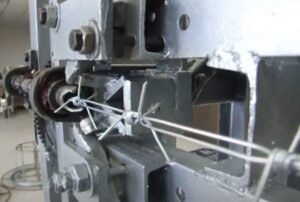
We use advanced automatic barbed wire machines to ensure consistency.
Twisting: The two line wires are twisted uniformly. Common twist types include:
Single Twist: One wire wraps around the other. Economical and common for general fencing.
Double Twist: Both wires wrap around each other. Provides higher strength and is less likely to unravel under tension.
Barb Spacing: Standard spacing is 3 to 6 inches (75mm to 150mm) . We can customize spacing based on your security needs (closer barbs for higher security).