
Choosing the right steel grating is essential for ensuring safety, durability, and cost-effectiveness. Below are key factors to consider based on load requirements, environmental conditions, and project needs.
- Consider Load Requirements
Load capacity is the primary factor in steel grating selection. Determine the maximum load the grating will bear—such as pedestrian traffic, vehicle passage, or maintenance equipment—to decide the bearing bar size and spacing.
For areas with frequent heavy vehicle access, choose grating with wider and thicker bearing bars and smaller spacing (e.g., 30mm).
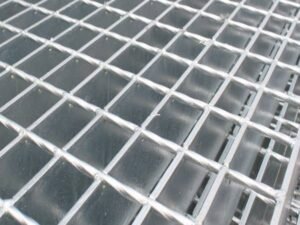
- Consider Environmental Conditions
Different environments require different materials and surface treatments:
General outdoor or industrial indoor use:
Hot-dip galvanized carbon steel grating offers the best cost-performance ratio.
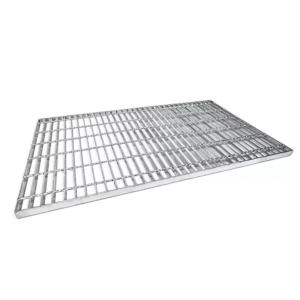
Chemical plants, coastal areas:
Use 304 or 316L stainless steel grating, or opt for a thicker hot-dip galvanized coating for enhanced corrosion resistance.
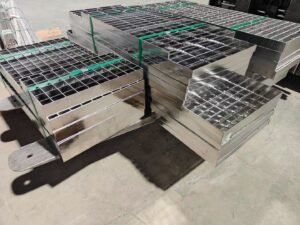
Pedestrian bridges, staircases:
In addition to load capacity, anti-slip performance is critical. Serrated steel grating is the ideal choice for these applications.
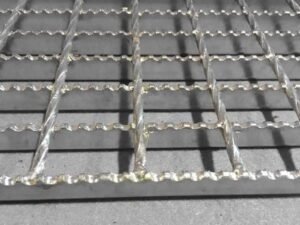
Elevated platforms or areas with risk of falling small tools:
Select grating with 30mm bearing bar spacing to ensure safety and prevent tool drops.
- Balance Cost and Aesthetics
40mm spacing is generally more economical and suitable for most standard applications where load requirements are moderate.
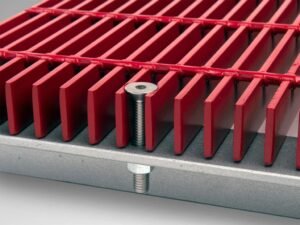
For projects with higher aesthetic demands—such as commercial complexes or landscape architecture—consider swage-locked (insertion) grating for a cleaner appearance, or powder-coated finishes in various colors to match design requirements.
Conclusion
Accurately understanding steel grating specifications is key to ensuring project safety, reliability, and cost efficiency. A specification is more than just a code—it is a precise description of product performance and suitable applications. We hope this guide provides clear direction for your steel grating selection.
We recommend consulting with technical professionals or suppliers to share detailed operating conditions and load requirements, ensuring you receive the most suitable and reliable product solution for your project.